Taking the Marathon as the starting point when thinking of racing isn’t really very logical. Even in the current era of mass participation running, 26.2 miles is never an easy prospect, and wouldn’t normally be your very first racing distance. However, as fate had determined that it would be my first race as an adult, I’ll begin with this classic distance race. My preparation for my first Marathon – the first London Marathon in 1981, isn’t to be found in any text book on the subject, and I wouldn’t recommend trying it. There are several reasons for this: Firstly, I was offered a friend’s entry nine days before the race. Even back in 1981, the swapping of numbers was against the rules. Don’t do it!
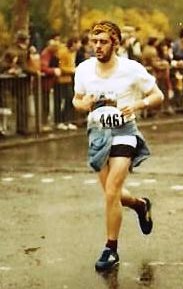
If it had been me crossing the line hand–in–hand with either Dick Beardsley or Inge Simenson after 2 hours 11 minutes and 48 seconds, I would have been disqualified, and how foolish would I have felt? Very foolish. Secondly, nine days and two training runs are not enough to build up, peak and then taper down in advance of your marathon effort. And finally, I didn’t own a pair of running shoes. If you are drawn toward running a marathon, there are countless books, magazines and online stuff that will offer you more than enough training schedules and advice on every angle of preparation, so there’s no need for me to suggest anything. If you want to complete one, give yourself 3 or 4 months to steadily build up, follow a schedule that feels right for your prospective pace, and matches the amount of time and effort you are willing to commit to. There is no doubt at all though in marathon running that there’s a direct correlation between how much work and effort you put into your training and preparation, and the result you’re likely to achieve. Stick to your chosen schedule as much as you can and you’ll be fine, and as you cross the finish line you should feel knackered, but you’ll still feel great. If you then feel motivated to do it again and to keep getting quicker, again you’ll get all the coaching you need from text books or magazines. You may also benefit from experiences of fellow runners, and if you are a club member, there’ll be no shortage of experience to draw on in that environment. For anyone aiming to improve their marathon performance, I have just one piece of advice to offer on the subject: Don’t be afraid of the distance! When I was achieving my best times, I would always run a couple of 24, 25 or 26 mile training runs in the 2 months leading up to the race, so that I felt no apprehension about the distance involved. Nothing worse than toeing the start line of a marathon, doubting you can go the distance. Good luck.
Next up – On the subject of…..getting quicker
80+ posts and counting. Quick search to see different subjects on the Index page. Hit the subscribe button (it costs nothing), to receive the next post “on the subject of…..”
 On the subject of running.....